The Status of Coral Reefs in Aqaba: Between Extinction and Restoration Efforts
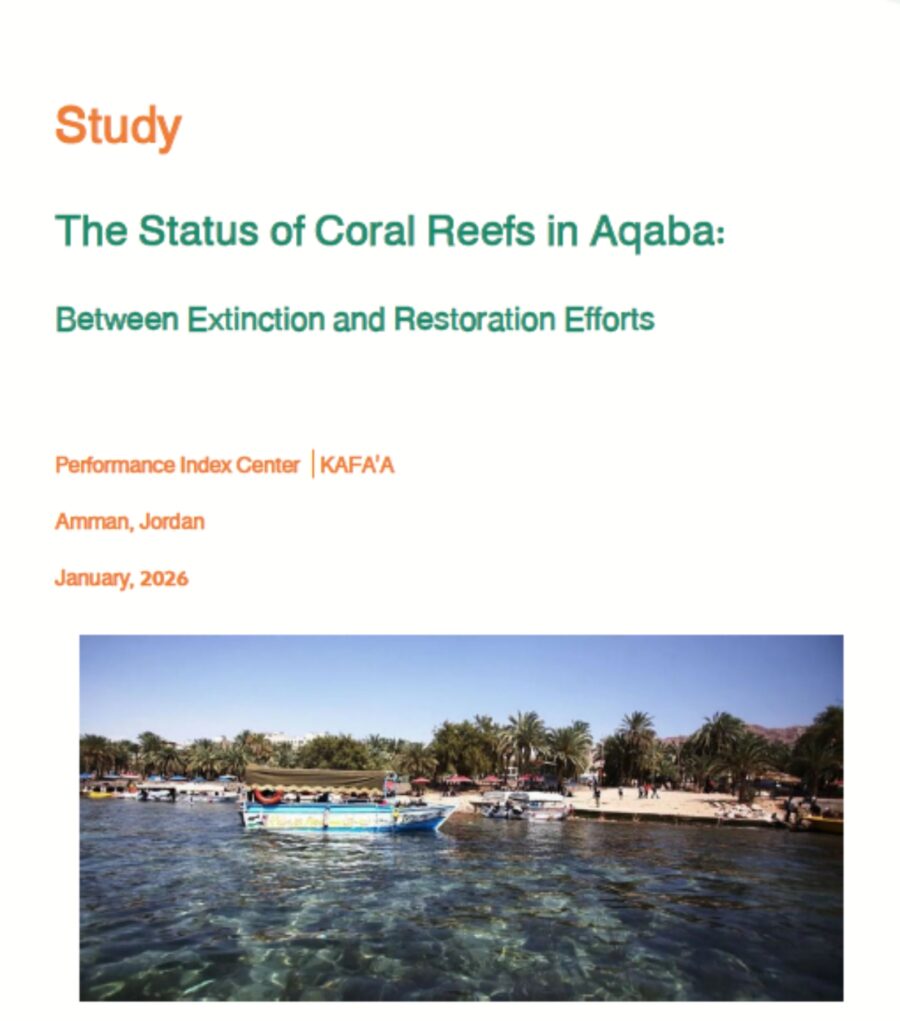
This study is part of the analytical series published by the Performance Index Center – KAFA’A. It aims to provide a comprehensive assessment of the environmental status of coral reefs in the Gulf of Aqaba, monitoring the impact of human, port, and tourism activities on their sustainability. Furthermore, it analyzes the primary challenges and opportunities for preserving this vital marine ecosystem.
The study relies on field observations and both local and international data to monitor coral reef health. It tracks the effects of coastal expansion, marine activities, oil pollution, and emissions from boats and ports, alongside the cultivation and rehabilitation efforts led by local authorities. The study also reviews the environmental measures and preventative procedures implemented to support reef sustainability, highlighting factors that may threaten long-term stability.
Key Findings:
• Resilience to Climate Change: Coral reefs in Aqaba continue to exhibit a high natural resistance to climate change, despite increasing pressure from human activities and coastal expansion.
• Impact of Coastal Development: Limited cases of partial bleaching were observed near urban project sites and ports; however, the impact remains lower compared to other regions in the Red Sea.
• Industrial & Economic Balance: The Mu’tah Pier contributes significantly to the local economy. While environmental measures are in place to mitigate emissions and pollution, there is a clear need for more advanced technologies to ensure operational sustainability.
• The Transition to Green Energy: Traditional boat engines produce carbon emissions, oil leaks, and noise pollution that disrupt the ecological balance. Transitioning to electric engines presents a major opportunity to improve water quality and protect coral reefs.
To access the full study, please download it from below. 👇